You’ve probably heard the term circadian rhythm thrown around on social media in the past few years as I have, but once I actually started implementing into my daily routine, I experienced a drastic change in my life. Modern convenience has come at a cost, provoking high stress, poor sleep, and health issues. Once I considered what my body needs and how it works harmoniously with our God given nature, my health and sleep have drastically improved. I’m not always as strict as I should be, but interestingly, I experience a beneficial difference when I adhere to my circadian rhythm.

In our fast-paced world, where doom scrolling into the night is the norm and schedules shift unpredictably, many people struggle with fatigue, poor sleep, and fluctuating energy levels. At the heart of these issues often lies a disrupted circadian rhythm—the body’s internal 24-hour clock that regulates sleep-wake cycles, hormone release, body temperature, and even digestion. Governed by a master clock in the brain’s suprachiasmatic nucleus, this rhythm evolved to sync with natural light-dark cycles, promoting alertness during the day and rest at night. When aligned, it boosts mood, cognitive function, immune health, and overall well-being. However, modern lifestyles—think jet lag, shift work, or binge-watching—can throw it off, leading to insomnia, daytime drowsiness, and health risks like metabolic disorders.
Improving your circadian rhythm isn’t about drastic overhauls; it’s about consistent, small changes that realign your body with natural cues. Drawing from expert insights, this article outlines practical tips and daily routines to reset and maintain your internal clock. Whether you’re a night owl aiming for earlier mornings or simply seeking sustained energy, these strategies can transform your days.

Circadian Rhythms: What it Is and Ways to Balance it
Understanding Your Circadian Rhythm and Why It Matters
Your circadian rhythm orchestrates a symphony of biological processes. Melatonin, the sleep hormone, rises in darkness to induce drowsiness, while cortisol peaks in the morning for wakefulness. Disruptions can stem from inconsistent sleep times, artificial light exposure, irregular meals, or lack of physical activity. Research shows that misaligned rhythms contribute to conditions like obesity, diabetes, and depression. The good news? You can influence it through “zeitgebers”—environmental time-givers like light and food.
To start, assess your current rhythm. Track your sleep patterns for a week: note wake-up times, energy dips, and bedtime. Tools like sleep diaries help identify issues, such as late-night snacking delaying your clock or skipping morning light causing sluggish starts.
Building a Consistent Sleep-Wake Schedule
The cornerstone of circadian health is regularity. Aim to wake up and go to bed at the same time daily, even on weekends, to anchor your internal clock. Differences of more than 30 minutes can mimic mini-jet lag, disrupting hormone balance. For adults, target 7-9 hours of sleep, but don’t exceed eight if you’re adjusting—oversleeping can perpetuate misalignment.
Daily Routine Tip: Set a fixed wake-up alarm, regardless of bedtime. If shifting earlier, adjust gradually by 15-60 minutes per day. Upon waking, avoid hitting snooze; instead, get out of bed immediately to signal “daytime” to your brain. This consistency reinforces your rhythm, making it easier to fall asleep naturally at night.
If you can’t sleep within 20 minutes of lying down, get up and engage in a relaxing activity like reading (not scrolling) until drowsy. Over time, this trains your body to associate bed with sleep, not tossing and turning.
Harnessing Light Exposure for Rhythm Reset
Light is the most potent zeitgeber. Morning bright light suppresses melatonin and boosts cortisol, kickstarting alertness. Conversely, evening blue light from devices delays your clock by mimicking daylight.
Morning Routine: Within the first hour of waking, get 10-30 minutes of natural sunlight exposure—step outside, open curtains, or walk. If weather or location limits this, use a 10,000-lux light therapy lamp or blue-light glasses for 20-30 minutes. This advances your rhythm, helping night owls become early risers. I also opt to get my sunlight in before I eat breakfast. Sunlight naturally balances melatonin; when you eat while your melatonin is higher, it affects digestion and hormones.
Afternoon Boost: Around midday or early afternoon, seek another 10-15 minutes of sunlight to maintain momentum and adjust retinal sensitivity, making you less vulnerable to evening artificial light.
Evening Wind-Down: Dim lights and reduce screen time at least one hour before bed. Use blue-light blockers or apps that filter blue wavelengths. In our home, we opt for our incandescent floor lamps and candles over our overhead LED lights. Studies confirm that artificial light at night alters physiology, impairing sleep quality. Opt for warm, low-wattage lamps to promote melatonin release.
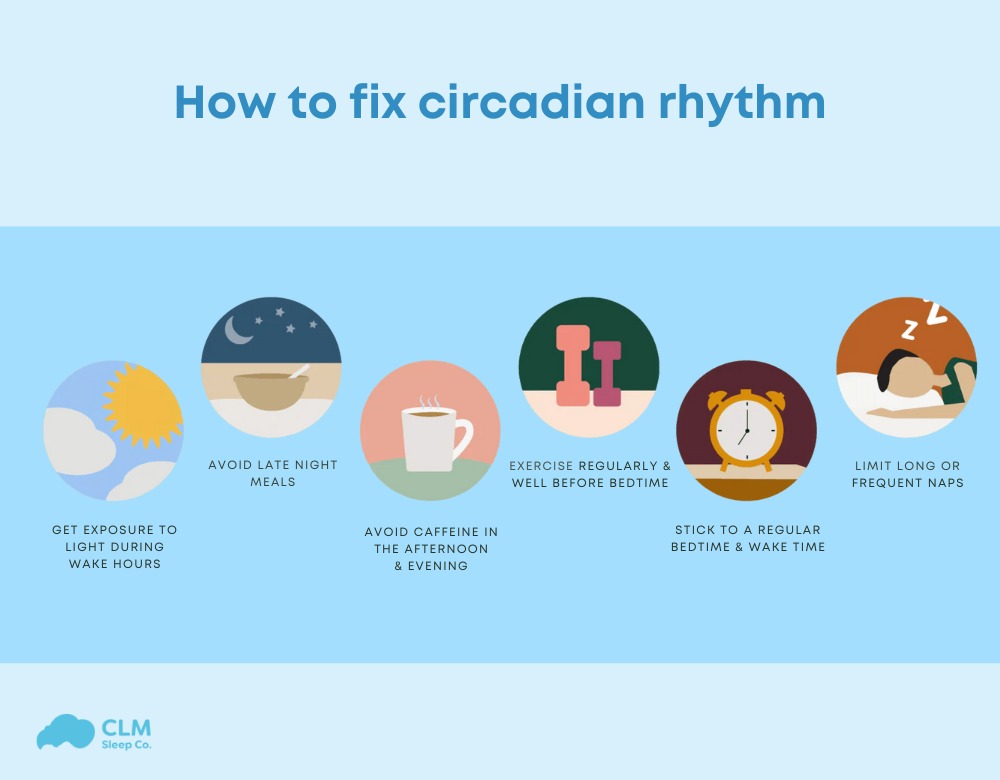
How to Fix Circadian Rhythm: Tips for Better Sleep and Health
Incorporating Exercise into Your Daily Flow
Physical activity synchronizes your rhythm by enhancing sleep quality and timing hormone releases. However, timing matters—late workouts can energize you too much for bed.
Daily Tip: Aim for at least 30 minutes of moderate exercise, like brisk walking or yoga, preferably outdoors to combine with light exposure. Ideal slots: 30 minutes after waking for a cortisol boost, or three hours post-wake for sustained energy. Research indicates regular exercise regulates rhythms, improving daily sleep schedules.
Avoid intense sessions within 2-3 hours of bedtime; opt for gentle evening walks to wind down. Even short “exercise snacks”—like jumping jacks during breaks—counter sedentary effects and support rhythm stability.
Optimizing Diet and Meal Timing
What and when you eat influences your peripheral clocks in organs like the liver. Consistent meal times cue your body, while late eating delays your rhythm.
Routine Integration: Eat breakfast soon after waking and after sunlight exposure to advance your clock, focusing on protein for steady energy. Space meals regularly—avoid eating in the first hour awake or within 2-3 hours of bed. Limit heavy dinners; opt for lighter evening meals to aid relaxation.
Curb caffeine after midday (it lingers 6+ hours) and alcohol in the evening, as both fragment sleep despite initial drowsiness. Stay hydrated. Intermittent fasting within a 12-hour window can reset rhythms, but fasting is not for everyone, especially women who struggle with high cortisol.
Crafting an Evening Relaxation Ritual
A soothing pre-bed routine signals downtime, easing the transition to sleep. Some of our best nights of sleep and sweetest moods come from reading in the evening vs watching TV.
Evening Habits: One hour before bed, dim lights, avoid screens, and unwind with reading or a warm bath. Practice mindfulness techniques like deep breathing to reduce stress, which can otherwise spike cortisol at night. Keep your bedroom cool (around 66°F), dark, and quiet. I have heard varying opinions on white noise. I personally don’t use it.
Limit naps to 15-20 minutes early in the afternoon to avoid interfering with nighttime sleep. If needed, try cold showers in the morning for an alertness jolt or evening walks for gentle decompression.
Additional Habits and Troubleshooting
Maintain humidity above 40% with a humidifier for uninterrupted sleep. If traveling or working shifts, use gradual adjustments and light therapy to minimize disruption.
Track progress with a sleep diary, noting improvements in energy and mood. Patience is key—full alignment may take weeks, but persistence yields lasting benefits.
A Sample Daily Routine for Circadian Optimization
- Morning (6-7 AM): Wake up, expose to sunlight for 10-30 minutes, eat a protein-rich breakfast after the first hour, followed by exercise.
- Midday (12-2 PM): Light lunch, short outdoor walk for light and movement.
- Afternoon (3-5 PM): Focused work in 90-minute blocks, with brief activity breaks; optional short nap if early.
- Evening (7-9 PM): Balanced dinner (no heavy meals), dim lights, relaxing activity like journaling.
- Night (10 PM): Bedtime ritual, lights out for 7-8 hours of sleep.
By integrating these tips, you’ll foster a robust circadian rhythm, unlocking better sleep, sharper focus, and vibrant health. Start small, stay consistent, and watch your body thrive in harmony with its natural cycles.
12 Health Benefits of Maintaining Your Circadian Rhythm
- Better sleep quality and faster sleep onset – Fall asleep easily, enjoy deeper restorative sleep, and wake up refreshed without grogginess.
- Higher daytime energy and alertness – Stable energy throughout the day with no mid-afternoon crashes.
- Improved mood and mental health – Significantly lower risk of depression, anxiety, and seasonal affective disorder due to balanced serotonin and melatonin levels.
- Sharper cognitive performance – Enhanced memory, focus, creativity, and faster reaction times.
- Stronger immune function – More efficient production of immune cells and reduced inflammation; studies show aligned rhythms lower risk of infections and chronic disease risk.
- Healthier metabolism and weight management – Better insulin sensitivity, reduced cravings, and lower risk of obesity, type 2 diabetes, and metabolic syndrome.
- Balanced hormones – Optimal cortisol (morning peak, evening dip), melatonin, growth hormone, and sex hormones (testosterone, estrogen) for vitality and fertility.
- Lower cardiovascular risk – Reduced blood pressure and decreased chance of heart disease and stroke.
- Faster muscle recovery and athletic performance – Training and recovery align with natural anabolic windows.
- Reduced cancer risk – Multiple large-scale studies link circadian disruption to higher breast, prostate, and colorectal cancer rates; proper alignment helps protect cells.
- Longer lifespan and healthier aging – Population studies consistently show people with stable sleep-wake schedules live longer and age more gracefully.
- Greater emotional resilience – Better stress regulation and fewer mood swings because cortisol and other stress hormones follow their natural curve.
- Lowers Inflammation – Better habits and less stress reduce inflammation in the body.